Saturday, 11 December 2010

This Should be a Staple in your Diet...-_-

Health benefits of Okra

  • Very low in calories, provides just 30 cal per 100 g and contains no saturated fats or cholesterol; but is a rich source of dietary fibre, minerals, vitamins; recommended in cholesterol controlling and weight reduction programs.
  • The rich fibre and mucilaginous content in Okra pods helps smooth peristalsis of digested food particles and relieve constipation condition.
  • The pods contain healthy amounts of vitamin A, and flavonoid anti-oxidants such as beta carotenes, xanthin and lutein. It is one of the green vegetable with highest levels of these anti-oxidants. These compounds are known to have antioxidant properties and are essential for vision. Vitamin A is also required for maintaining healthy mucus membranes and skin. Consumption of natural vegetables and fruits rich in flavonoids helps to protect from lung and oral cavity cancers.
  • Fresh pods are good source of folates; provide about 22% of RDA per 100 g. Consumption of foods rich in folates, especially during pre-conception period helps decrease the incidence of neural tube defects in the offspring.
  • The pods are also an excellent source of anti-oxidant vitamin, vitamin-C; provides about 36% of daily recommended levels. Consumption of foods rich in vitamin-C helps body develop immunity against infectious agents, reduce episodes of cold and cough and protects body from harmful free radicals.
  • These veggies are rich in B-complex group of vitamins like niacin, vitamin B-6 (pyridoxine), thiamin and pantothenic acid. The pods also contain good amounts of vitamin K.  Vitamin K is a co-factor for blood clotting enzymes and is required for strengthening of bones.
  • The pods are also good source of many important minerals such as iron, calcium, manganese and magnesium.
Some people are put off by the texture, but with the sweet flavour this veggie cannot be passed...

Thursday, 9 December 2010

Do You know your (Dark) Greens?


Rocket has a peppery taste and is rich in vitamins A, C, and calcium. It can be eaten raw in salads or added to stir-fry, soups, and pasta sauces.

Broccoli has both soft florets and crunchy stalks, and is rich in vitamins A, C, and K, folate, and fiber. Broccoli can be eaten raw or steamed, sautéed or added to a casserole.

Collard Greens have a mild flavor and are rich in vitamins A, C and K, folate, fiber, and calcium. The best way to prepare them is to boil them briefly and then add to a soup or stir-fry. You can also eat collard greens as a side dish. Just add your favorite seasoning and enjoy!

Dandelion Greens have a bitter, tangy flavor and are rich in vitamin A and calcium. They are best when steamed or eaten raw in salad.

Kale has a slightly bitter, cabbage-like flavor and is rich in vitamins A, C and K. Kale is tasty when added to soups, stir-fries, and sauces.

Mustard Greens have a peppery or spicy flavor and are rich in vitamins A, C, and K, folate, and calcium. They are delicious when eaten raw in salads or in stir-fries and soups.

Romaine Lettuce is a nutrient rich lettuce that is high is vitamins A, C, and K, and folate. It is best when eaten raw in salads, sandwiches or wraps.

Spinach has a sweet flavor and is rich in vitamins A and K, folate, and iron. Spinach tastes great eaten raw in salads or steamed.

Swiss Chard tastes similar to spinach and is rich in vitamins A, C, and K, potassium and iron. It is best stir-fried or eaten raw in salads.

My Personal Fav - Peanut Stew, Health Benifits, You Ask?

Chard, sweet potato & peanut stew


In addition to being every kid's (and many grownup kid's) favorite sandwich filling, peanuts pack a serious nutritional punch and offer a variety of health benefits.
 
Your Heart Will Go Nuts for Peanuts...
Peanuts are a very good source of monounsaturated fats, the type of fat that is emphasized in the heart-healthy Mediterranean diet. Studies of diets with a special emphasis on peanuts have shown that this little legume is a big ally for a healthy heart. In one such randomized, double-blind, cross-over study involving 22 subjects, a high monounsaturated diet that emphasized peanuts and peanut butter decreased cardiovascular disease risk by an estimated 21% compared to the average diet.
 
In addition to their monounsaturated fat content, peanuts feature an array of other nutrients that, in numerous studies, have been shown to promote heart health. Peanuts are good sources of vitamin E, niacin, folate, protein and manganese. In addition, peanuts provide resveratrol, the phenolic antioxidant also found in red grapes and red wine that is thought to be responsible for the French paradox: the fact that in France, people consume a diet that is not low in fat, but have a lower risk of cardiovascular disease compared to the U.S. With all of the important nutrients provided by nuts like peanuts, it is no wonder that numerous research studies, including the Nurses' Health Study that involved over 86,000 women, have found that frequent nut consumption is related to reduced risk of cardiovascular disease

Wednesday, 8 December 2010

Cough and Cold ...Garlic and Honey is Your Answer This Winter


Interested in boosting your immune system? Or how about easing that cough you've had for weeks? Well you can do both these things and more just by getting your daily dosage of garlic and honey. These bacteria fighting herbs contain natural compounds, and act as a boost  to revitalize and rejuvenate your entire body!
Garlic is one of the earliest spices to be used and is full of powerful antibiotics that help boost the immune system. Garlic is antibacterial, antifungal, antiseptic, and stimulates the immune system. This amazing herb can help lower cholesterol, keep your blood sugar low; your heart toned, and is great for the body's circulatory system.

Garlic kills bacteria the minute it enters the gastrointestinal tract. Garlic is also used to help diabetics increase their insulin production and decrease their blood sugar levels. It can also act against herpes simplex, and influenza B. Garlic is at its strongest if eaten raw.

Honey has been used medically since the ancient Romans, Greeks, and Egyptians. It used to be referred to as the Elixir of Life. Honey is a natural antibiotic and contains vitamins such as C, B complex, E, D, and K. The types of vitamins in honey vary depending on what flowers the bees are extracting the nectar from.
Honey however, is not only great for medical conditions inside the body such as ulcers, but honey is also used to treat wounds outside the body. Honey is an excellent natural preservative therefore is great to use for wounds such as burns or broken blood vessels. In fact honey is such an excellent preservative of living tissue, in less modern time's people would use honey to stall the decomposition of dead bodies. This amazing healing source will also help treat any common respiratory issue such as the common cold, and will help you get on track to a healthy immune system!

Raw Food

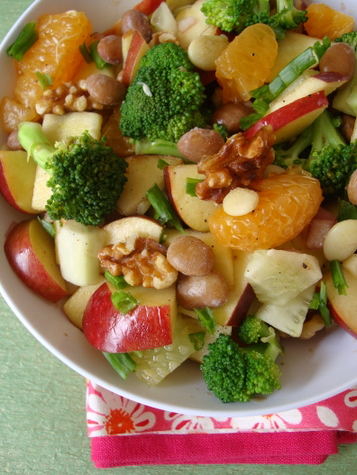
Apple Broccoli and Cucumber Salad With Walnuts

RAW FOODS - Each and every day, we should all incorporate raw foods into our meals. Raw foods are still ALIVE, whereas processed foods, cooked foods, and all meats and animal products are DEAD. It stands to reason, then, that human bodies comprised of living cells demand living nourishment for peak health. Many valuable but fragile vitamins, enzymes, phytochemicals and probably other things as well are destroyed during cooking.

By adding fresh-as-possible, preferably organic vegetables, fruits, seeds, and nuts to your diet, you will be greatly enhancing the nutritional value of your eating regimen.
I have heard marvelous stories about people, once very, very sick, who were able to reverse their conditions by switching to a mostly raw foods diet. Obviously, there is something excellent about raw food. One minister I know of advocates and himself eats an 85% organic raw foods diet. He and those he has influenced have greatly reduced the occurrence of sickness and disease in their lives and have completely healed from maladies which the medical community had not been able to effectively treat through drugs and surgeries.

Currently, I eat about 40-50% raw, which means incorporating raw foods into every meal. My goal is to increase my ratio of raw to cooked food. While I would support anyone�s desire to eat raw foods exclusively, a good place to start is simply to include some raw foods on your menus.
If you're not accustomed to eating raw foods, try adding a little at a time, until you maximize your ratio of raw food to cooked food without suffering hunger between meals. By all means, experiment! By eating a wide variety of both raw and cooked foods, you can obtain a lot of good nutrition and be satisfied.


Saturday, 2 October 2010

Interview with The Health Inspiration of the Week: Ife Piankhi


Tell us about yourself

my name is ife piankhi i was born in London to African Caribbean parents. From a very early age i was an avid reader i started with novels and progress to reading non fiction for many years. This began my journey of self discovery as an Afrikan of the Diaspora. Through my reading ive discovered alot of what we are are taught about diet/nutrition is incorrect. my studies and training in particular  with dr llaila afrika has taught me that the physiology of Africans is very different from other people and we need to bear that in mind when caring/healing ourselves and others of afrikan descent. I currently reside in Uganda, leaving the western hemisphere in order to gain optimum health from the environment. Sunlight, fresh food and heat are a vital component for Afrikans to stay healthy and happy. My partner Pablo Imani practices and teaches Afrikan Yoga and we incorporate the practice into our daily lives in order to maintain our health, vitality, flexibility and spiritual sensitivity. http://www.afrikanyoga.com/

When did you realise health was important to you through foods?

 i realised that health was important after i gave birth to my first child, it was a hospital birth with much medical intervention. I was very traumatised by the experience and i was determined to explore natural birth which included breathing, nutrition, stretching, meditation, and colour therapy ( i only wore certain colours during pregnancy). As a result of changing my lifestyle ive had 3 subsequent natural births, two of which were at home in a pool. My recovery time was very fast compared to my first birth. My children were alert, peaceful and happy. Because my life is very active having children of my own, teaching,and performing,  ive found its important to pay attention to my diet in order to maintain my energy. Children need alot of energy and mental stimulation and ive found that my diet supports this. so i can keep up with them!

What is your general way of eating (diet)?  ie meat, veggie, vegan, and for how long?

In london i was vegan. I didn´t fry my food, i ate no refined foods, white sugar, flour or salt  but since being in Africa i eat fish occasionally now. I eat plenty of fruit and vegetables, pulses, groundnuts. Ive been on this regime for about 16 years now.

Why is your diet important to you?

 You are what you eat. Ive seen too many of my elders unable to enjoy their maturity due to ill health due to poor eating habits and lack of exercise. i want to mature gracefully and when i make my transition i want it to be peaceful and not painful.
What is  your experience with educating people who do not know benefits of healthy eating Ive been an educator for 20 years and when i came into any new information i was fanatical, i admit it. I used to tell people what was bad for them but I´ve found this doesn´t really work it just makes people feel guilty or resentful. Now i meet people where they are at. I don´t judge them. We have an emotional attachment to what we eat and people have to be ready to make changes for themselves. Im a holistic practitioner so when people consult with me i look at the whole person body, mind and soul. They won´t change if im preaching at them. So my approach is just to give the information and make suggestions for simple step by step changes. I´ve learnt to practice patience,compassion and offer support as and when they need it.   
What is your favourite super food and why?

i love goldenseal its an amazing herb thats very powerful. i love ginger, cayenne, cream of coconut, millet, quinoa, sunflower seeds, dates, figs, the list is endless, i love eating good food i guess. Basically i focus on foods that alkaline the body as i know most of us are quite acidic.
Your words of wisdom for those to maintain good health and wellbeing?

When changing your diet or lifestyle be patient and nurturing with yourself. If you know you have eaten something which you shouldn´t understand your craving and get informed about cleansing herbs that can assist in eliminating the substance from your body. Bad habits are easy to form but hard to break. Remain loving with yourself and take each day at a time. Monitor and document the changes you feel become your own best friend, lastly enjoy your life. ife

Ife can be contacted at topgie@gmail.com
She currently resides in Kampala and works with many groups including In Movement - Art for social change as a creative facilitator. Ife is also a wholistic practitioner, poet and singer

Wednesday, 29 September 2010

Health Tip of the Week!!!

To reduce refined sugar intake, watch for the words sucrose, dextrose, fructose, corn syrup sweeteners, maltose and lactose on food labels.

Most of us have heard the term “empty calories.” These are calories we consume that have little or no nutritional benefit. Think: soft drinks, candy, cookies and assorted treats. Empty calories can lead to obesity as well as nutritional deficiencies. The more empty calories you consume, the less appetite you have for healthier, nutrient dense foods.
To support good health, become aware of your daily intake of added sugar, cut back accordingly, and learn to recognize hidden sugars on labels. Any ingredient with a name that ends with the letters “ose” are kinds of sugars – dextrose, sucrose, maltose, lactose, glucose and fructose. Other concentrated sweeteners include corn syrup, sorghum syrup, cane juice, invert sugar, high fructose corn syrup, malt sugar, brown rice syrup, molasses, brown sugar, agave, honey, beet sugar and evaporated cane juice.


Of course, the sugar picture gets a bit murkier because there are naturally occurring sugars in fruits and dairy products. The good news is that when sugar occurs in nature, it is typically accompanied by fiber, fat and/or protein. This is a perfect design by nature as these elements slow the rate at which the sugar is absorbed in our bodies. This prevents havoc on our blood sugar levels. So, it’s perfect to feed that sweet tooth with a piece of fresh fruit.
On the downside, some people hear “avoid sugar” and they rush to diet sodas and other products with artificial sweeteners. As you may know, Whole Foods Market’s quality standards don’t allow any products with artificial sweeteners. Some of these start off as pure sugar but undergo a chemical process that converts it into a molecule that does not occur in nature.
Instead of heading down that road, here are some natural solutions for reducing your sugar consumption:
  • Start gradually – you’ll be more likely to stick to it! If you sweeten your tea or coffee, use half the amount of sugar. Soon, it will taste sweet enough, and you can reduce even further. If you drink sodas (and even diet sodas), reduce your consumption by half. When you want a fizzy drink, mix sparkling water with 100% fruit juice. Try this for a week or two and when ready, cut your intake again by half.
  • Buy plain yogurt, plain kefir, unsweetened breakfast cereals, unsweetened iced teas, unsweetened bottled water and unsweetened frozen fruits-you may need to read labels to ensure that they are unsweetened. If needed, sweeten them just a bit at home. This way you control the amount of sugar you consume.
  • When you do sweeten at home, use unrefined sugars that have nutrients intact. Examples are pure maple syrup, honey, evaporated cane juice and agave nectar (a sweetener from the agave plant). Remember, even though natural and unrefined, these are still sugars, and should be consumed in moderation. Here’s more on natural sweeteners.
  • Avoid fat-free versions of foods, like fat-free salad dressings and sauces. These often contain greater amounts of sugar to compensate for less fat.
  • In recipes, experiment with reducing the amount of sugar called for by about one-fourth.
  • Limit sweet desserts to special times such as weekends, parties and birthdays. When eating out, share your dessert with others.
  • Choose whole or cut fruits, grapes and berries for a non-sugary dessert. Sprinkle with cinnamon for an added treat. Baked fruit provides its own natural sweetness too.
  • Reduce your intake of processed foods in packages and cans. These often contain added sugars.
  • Eat a well-balanced diet containing proteins, healthy fats, and unrefined carbohydrates from starchy vegetables, whole grains, legumes and whole fruits. Balance on your dinner plate helps create balance in your body!
  • Before you indulge an acute sugar craving, grab a handful of nuts. The healthy fat and protein in nuts can satisfy a sweet tooth and help balance your blood sugar.
  • Instead of eating a whole candy bar, choose just a small piece of good quality dark chocolate. Melt this slowly in your mouth for the most satisfying effect. (This is my favorite way to enjoy chocolate!)

Do you have some tricks for dealing with a sugar craving or cutting back on sugar? Share!